
Anonymity and the State’s Files
The Day of the JackalThis flow explores the novel’s conflict between an individual who erases his identity and institutions that depend on records to identify danger.
increasing Bearing strength in each event
 decreasing
Bearing strength in each eventdecreasingThe File as Reality

The File as Reality
Rodin’s bureaucratic insight
Marc Rodin believes that what does not appear in the state’s files effectively does not exist. He chooses an outsider because French services have dossiers on the known OAS conspirators.
A gap in the system
The Jackal’s anonymity is not supernatural; it is produced by deliberate choices and by the limits of records. The state’s strength in collecting information becomes a weakness when its adversary has avoided generating it.
A Manufactured Biography
A Manufactured Biography
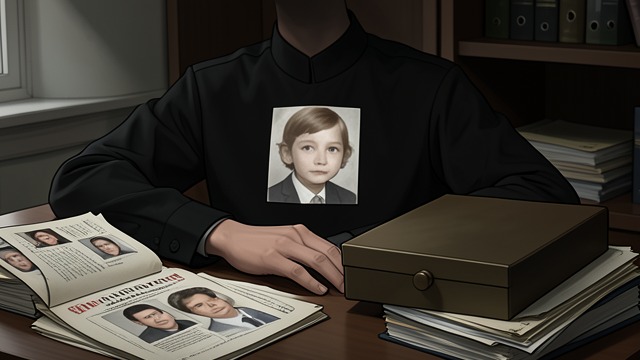
Identity assembled from paperwork
The Jackal creates a passport using real civil records for a child who died decades earlier. He combines the authentic fragments with a false photograph and forged signatures.
Legitimacy by appearance
The documents work because officials see an apparently consistent identity and have little reason to test every underlying fact. The novel shows how bureaucracy can authenticate a convincing story without discovering the person who constructed it.
Routine Records Reassembled
Routine Records Reassembled
The detective’s method
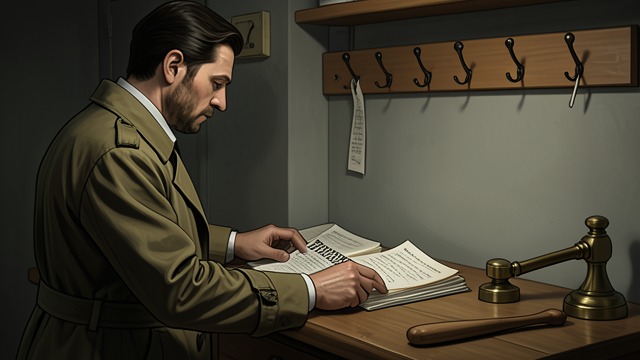
Claude Lebel connects passport applications, death certificates, hotel registrations, and border cards. None of these records alone reveals The Jackal, but together they establish the Duggan identity and his movements.
The state learns to infer
Lebel’s work counters the assassin’s strategy through patient comparison rather than a single breakthrough. The same paper trail that enables disguise also creates the possibility of discovery.
Records Versus Performance
Records Versus Performance
Identity changes faster than files
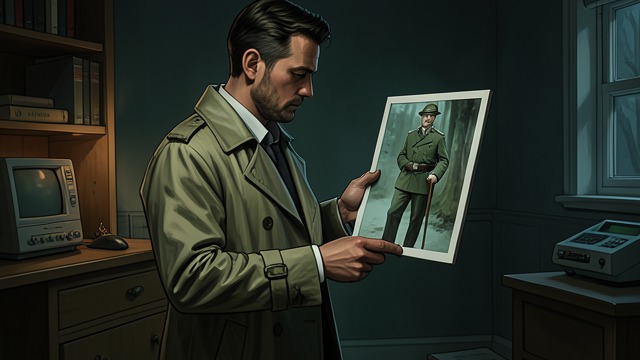
The Jackal shifts from Duggan to Jensen, then Schulberg and finally André Martin. Official records often arrive after he has discarded the identity they describe.
A face noticed in time
The decisive clue is not a fresh file but Pierre Valremy’s memory of the crutch-bearing veteran. Lebel recognizes the performance as a possible concealment and combines observation with his accumulated knowledge.
The Unnamed Grave
The Unnamed Grave
A death without identity
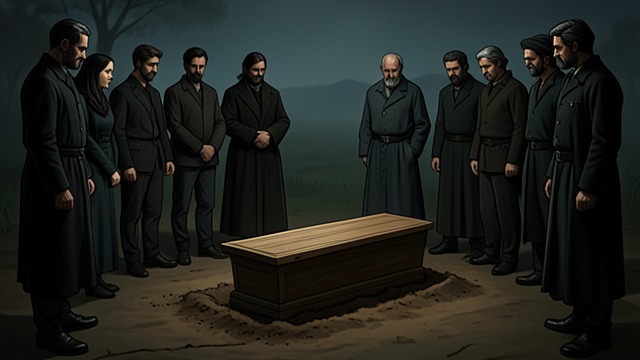
The Jackal is buried as an unnamed foreign tourist killed in an accident. Officials and witnesses preserve a version of events that avoids publicly acknowledging his origins or full history.
Anonymity survives the man
The state has stopped the assassin, but the identity behind his disguises remains unresolved. The unmarked burial completes the novel’s portrait of a person who made himself difficult to name even in death.
June 1963
July 1963
August 11 to 15, 1963
August 21 to 25, 1963
August 26, 1963
